
An Advisory Division of 7Mills
Your business,
ready to sell.
Most owners discover what buyers needed to see when the offer lands. By then, there is nothing left to fix.
When you sell your house,
you prepare it first.
Most business owners never do the same.

Same EBITDA. Three owners.
Three very different exits.
€500K EBITDA. The only difference is what each owner did in the years before going to market.
Score 0–34 · Owner dependent · Messy books · Concentrated revenue
Most buyers never make an offer. The ones who do price every risk in. The deal falls apart in due diligence.
Score 35–60 · Some preparation · Books cleaner but not clean
A deal gets done. Slower than expected. Three things in due diligence cost him the difference.
Score 75+ · Clean financials · Independent team · Diversified revenue
Clean due diligence. Multiple interested buyers. He negotiates from strength — the business runs without him.
This is not the cost of hiring BuildExitReady.
This is the cost of doing nothing.

Why BuildExitReady
"I've seen good businesses fail to sell.
The businesses weren't the problem."
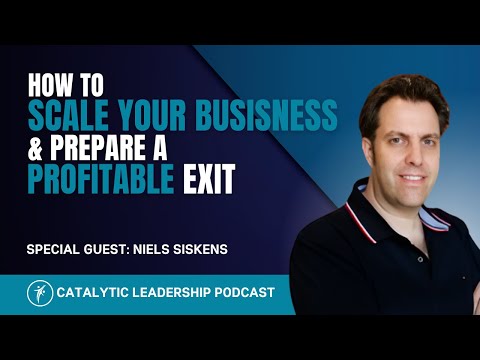
Niels Siskens spent nearly a decade building Parrolabs, then moved into buy-side work — evaluating acquisition targets across Europe. The same things kept appearing: financials that needed explaining, operations that only worked because the founder was in the room, revenue tied to relationships no buyer would inherit. The business was real. The evidence wasn't.
IE Business School MBA
Our Framework
The 7 Mills Score
When a buyer looks at your business, they see what can go wrong after they buy it. The 7 Mills Score measures seven areas where businesses typically fall short — owner dependency, revenue quality, financial clarity, management depth, operational systems, customer concentration, and strategic positioning — and shows you what a buyer will find before they do.
How it works
Score
17 questions across all 7 dimensions. Under 15 minutes. Results by email.
Blueprint
The Foundation Programme identifies what's reducing your value and builds a prioritised plan.
Execute
The Growth Programme closes each gap month by month until the business is ready.
Who This Is For
You built a profitable business.
Now build one a buyer wants.
Most owners are the single point of failure in their own business. That's fine while you're running it. It's fatal when a buyer's lawyer finds it.
Enough history for a buyer to build a financial picture.
Enough runway to do the work properly.
You are the business operationally — the most common gap we see.




Programmes & Pricing
Fixed price.
Defined scope.
Work that stays.
Foundation
Programme
Eight weeks of structured work across every dimension of the business. We score it, document it, and tell you what a buyer would see today. Most owners find that picture uncomfortable. That is the point.
Right for you if
You are serious about exit but have not yet started preparing. The Foundation gives you an honest baseline, the documents that prove it, and a prioritised plan for what to do next. Most clients move straight into the Growth Programme from here.
What you leave with
- 7 Mills Baseline ReportYour score across all seven dimensions, with the reasoning behind it
- Business Playbook15–20 pages on how the business actually runs
- Role Clarity MapWho owns what when you are not in the room
- Financial Readiness ReportWhat a buyer's accountant would find today
- Revenue Resilience MapWhere your revenue is concentrated and where it is not
- Owner Readiness ReportHow dependent the business is on you, personally
These documents belong to the business. They are the foundation for the Growth Programme and the starting point for any buyer conversation.
Growth Programme
The Foundation tells you what to fix. The Growth Programme works through it alongside you, month by month, until your score reaches exit-ready. Monthly strategy sessions, a progress score report, and market intelligence briefings included.

Referral Partner Programme
For accountants, solicitors, brokers & advisors
Refer a client.
Stay in the picture.
You know which clients have a gap between what they think the business is worth and what a buyer will pay. We close it. You receive an introduction fee when they start a programme.
Become a referral partner →We talk first
A short call about your practice. Back to you within one business day.
You make the introduction
A short email is enough. We take it from there.
We assess and report back
We run the 7 Mills Score and share the outcome with you directly.
You receive an introduction fee
Paid when your client starts a programme. Confirmed in writing.
Common Questions
What founders ask before they start.
- Preparation starts 3 to 5 years before you want to sell — not 6 months. The core work is closing the gaps buyers use to negotiate price down: reducing owner dependency, cleaning up financials, documenting operations, and building a management layer that can run the business without you. Most owners discover these gaps during due diligence, when it is too late to fix them.
- Most owner-managed businesses are valued on an EBITDA multiple — typically 3× to 7× for businesses in the €2m to €10m revenue range. The multiple is not fixed: it is a buyer's assessment of risk. Strong owner independence, recurring revenue, documented processes, and a capable management team all push the multiple up. Weak performance in any one of these compresses it. The gap between what owners expect and what buyers pay is usually structural, not commercial.
- Selling without a broker is possible — and many owner-managed businesses are sold through direct approaches, accountant introductions, or industry contacts. The risk is not finding a buyer; it is arriving unprepared. Buyers and their advisors do thorough due diligence. Without clean financials, documented processes, and a business that can run independently, even a willing buyer will renegotiate price or walk away. Preparation matters more than the channel.
- Most owner-managed businesses are acquired by one of four types: a trade buyer in the same industry looking for revenue, customers, or capability; a private equity firm building a platform in your sector; a management buyout where your own team buys you out; or an individual buyer looking for an established business to run. Each type looks for different things and values the business differently. Knowing who your likely buyer is shapes how you prepare.
- The sale process itself — from first approach to completion — typically takes 6 to 12 months. But that assumes the business is already prepared. If it is not, the timeline extends, or the deal collapses in due diligence. Businesses that complete a sale in good time have usually spent 2 to 4 years fixing the structural issues buyers would otherwise find. The preparation period is the variable most owners underestimate.
- Not necessarily — but the data is consistent. Businesses that go through a structured preparation process achieve materially better outcomes: higher multiples, fewer conditions, cleaner completions. An exit readiness advisor works on the business before a buyer is involved, closing gaps before they become negotiating points. An M&A advisor manages the sale process once you are ready. They are different roles. Most owners engage one without the other and are surprised by the result.
- Buyers are assessing risk, not just opportunity. They look for businesses that can operate without the founder, with revenues that are predictable and not over-concentrated in a few customers, financials that are clear and auditable, documented processes that do not depend on key individuals, and a management team that will stay post-sale. A business that scores well across these dimensions is genuinely harder to negotiate down — the buyer has less leverage.
Start Today
Under 15 minutes.
Find out where you stand.
Take the Free 7 Mills Score → Free · Under 15 minutes · Written report by email